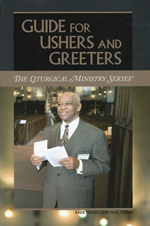
 Ushers/Greeters/Ministers of Hospitality were provided a copy of Liturgical Training Publications’ Guide for Ushers and Greeters.
Participating in the Discussion
Ministers were asked to read the Guide before coming to this webpage to take part in the online discussion. To take part in the discussion, you will not need to “Log In” (unless we begin attracting spam entries, at which point you will be given new instructions).
Please read the initial reflection by the Focus Session presenter, Neville O’Donohue, SM, and any other posts/replies that follow. You then have two choices in the discussion: (1) post a brand new comment in the box (starting a new “thread”) or (2) reply to a comment or another reply previously posted (continuing a thread). Discussion proceeds accordingly.
For additional assistance, contact Bruce Baumgarten (baumgartenb@saintjoseph.cc).
An Opening Reflection
The following paragraph, though rather dense, clearly expresses the hope of the church for everyone who gathers to celebrate the Eucharist.
The Church…earnestly desires that Christ’s faithful, when present at this mystery of faith, should not be there as strangers or silent spectators; on the contrary, through a good understanding of the rites and prayers they should take part in the sacred action conscious of what they are doing, with devotion and full collaboration; …be instructed by God’s word; …nourished at the table of the Lord’s body; …give thanks to God; by offering the Immaculate Victim, not only through the hands of the priest, but also with him, learn to offer themselves; through Christ the Mediator, be drawn day by day into ever more perfect union with God and with each other, so that finally God may be all in all.Sacrosanctum Concilium #48 (the first Decree of the Second Vatican Council: on the Liturgy)
The words above list many hopes. Can you list the hopes? So how people gather and are helped to gather for the Liturgy sets the tone for their engagement and openness to what if being suggested above. The role of those in Welcome Ministries and those who are who are Ushers is to attend to helping people to be open and remain open to the mysteries being celebrated. I borrow a text, written for the purpose of explaining what the introductory rites of the Mass are, and I apply it to the ministry done by Welcomers and Ushers.
Their purpose is to ensure that the faithful, who come together as one, establish communion and dispose themselves properly to listen to the Word of God and to celebrate the Eucharist worthily.General Instruction of the Roman Missal #46 (Commonly known at the “GIRM,” it can be found in full at the USCCB website. It is an interesting read.)
The foundation of our on line discussion then is that the liturgy is the work of the entire assembly gathered and that ministers of the liturgy must ensure people establish communion for the purposes of fulfilling the rich hope the church has for them as the celebrate the Eucharist.
For your discussion, consider the following:
- Do you agree—and do you feel in yourself—the orientation of the liturgical ministries as servants to the assembly?
- What two things struck you in your reading of the book up to and including page 14—be that historical, theological, or practical and why did they strike you?